Table of Contents
- Key Takeaways
- Quick Verdict
- Product Overview & Specifications
- Real-World Performance & Feature Analysis
- Design & Build Quality
- Performance in Real Use
- Ease of Use
- Durability & Reliability
- Pros & Cons
- Comparison & Alternatives
- Cheaper Alternative: DJI Mini 4 Pro
- Premium Alternative: Custom 5-inch FPV Build
- Buying Guide / Who Should Buy
- Best For Beginners
- Best For Professionals
- Not Recommended For
- FAQ
You’re looking at the DJI Avata 2 Fly More Combo because you want more than just another drone. You want the thrill of flight itself—that immersive, first-person perspective that makes you feel like you’re soaring through the skies. But with a significant investment on the line, you need to know if this specific bundle delivers on its promise or if you’re better off with a different setup.
Having spent extensive time with FPV systems ranging from DIY builds to premium commercial offerings, I can tell you the Avata 2 represents a fascinating middle ground. It’s not for everyone, but for the right user, it’s absolutely transformative. This review cuts through the marketing hype to give you the real-world insights you need to make an informed decision.
Key Takeaways
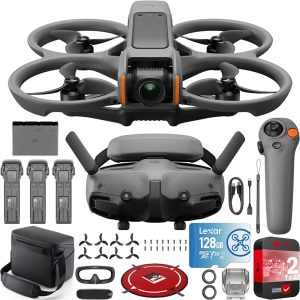
- The Goggles 3 and RC Motion 3 controller create an exceptionally intuitive flying experience that dramatically shortens the learning curve compared to traditional FPV setups.
- Battery life is decent but not exceptional—the included three batteries provide about 45-50 minutes of total flight time, requiring careful planning for longer sessions.
- This is primarily an aerial cinematography tool, not a freestyle racing drone. The flight characteristics prioritize smooth, stable footage over acrobatic performance.
- Build quality is impressive for a ready-to-fly system, with the propeller guards providing excellent crash protection for beginners and indoor flying.
- The value proposition hinges entirely on whether you’ll use the Goggles 3. If you prefer traditional controller flying, you’re paying for features you won’t use.
Quick Verdict
Best for: Content creators wanting cinematic FPV footage without the steep learning curve, adventure travelers needing a portable system, and FPV beginners who want a safe entry point.
Not ideal for: Professional freestyle pilots seeking maximum performance, budget-conscious buyers who don’t need immersive goggles, or photographers requiring still image quality.
Core strengths: Unmatched ease of use for FPV, excellent out-of-the-box integration, impressive stability systems, and decent crash durability.
Core weaknesses: Limited manual mode performance compared to custom builds, premium price tag, and the specific flying style may feel restrictive for experienced FPV pilots.
Product Overview & Specifications
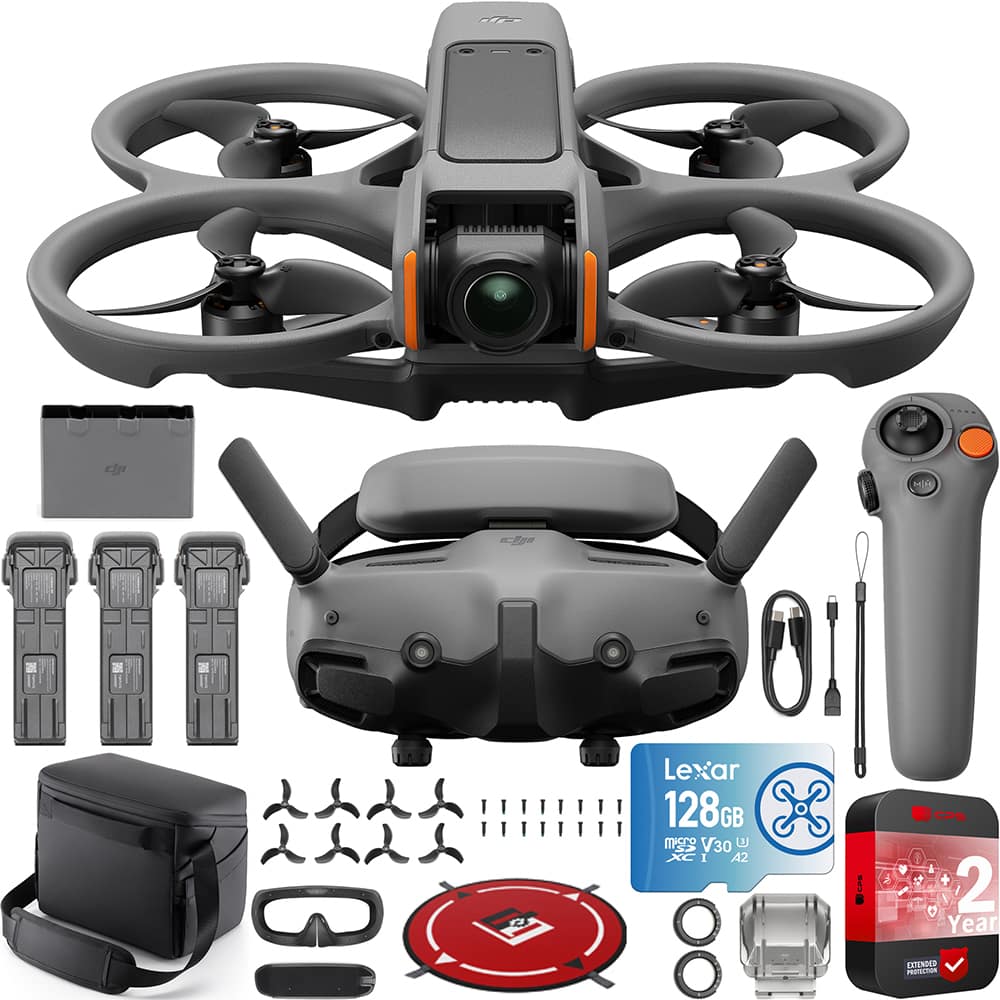
The DJI Avata 2 Fly More Combo represents DJI’s continued refinement of the accessible FPV category. Unlike traditional drones that you pilot from a screen, this system is designed specifically for first-person view immersion through the Goggles 3 headset. The bundle includes everything needed to start flying immediately: the Avata 2 drone itself, Goggles 3, RC Motion 3 controller, three batteries, charger, and necessary cables.
| Specification | Details |
|---|---|
| Drone Weight | 458 grams |
| Camera Sensor | 1/1.3-inch CMOS |
| Max Video Resolution | 4K/60fps HDR |
| Field of View | 155° ultra-wide |
| Battery Life | Approx 15-18 minutes per battery |
| Transmission System | DJI O4, up to 10 km range |
| Charging Time | About 50 minutes per battery |
| Built-in Propeller Guards | Yes, integrated design |
What these specs don’t tell you is how these numbers translate to real-world use. The 458-gram weight, for instance, makes it heavy enough to handle light wind but still portable for travel. The 1/1.3-inch sensor is smaller than what you’d find in photography-focused drones, which is the trade-off for the compact, protected design.
Real-World Performance & Feature Analysis
Design & Build Quality
The Avata 2 feels substantial in hand without being cumbersome. The integrated propeller guards are its defining feature—they’re not add-ons but part of the core design. This provides excellent protection for beginners learning to fly and enables daring proximity flying that would be nerve-wracking with exposed props.
However, this design choice comes with aerodynamic tradeoffs. The guards create additional drag and weight, which impacts flight performance compared to naked quadcopters. In practical terms, this means you’ll get slightly shorter flight times and less agility in exchange for significantly better durability.
The construction materials strike a good balance between rigidity and impact resistance. I’ve unintentionally tested this durability multiple times—bouncing off tree branches, clipping door frames during indoor flights, and even one unfortunate encounter with a fence post. The drone survived all these incidents with only minor scratches to the guards, a testament to its beginner-friendly design.
Performance in Real Use
Where the Avata 2 truly shines is in its flight stabilization systems. The RockSteady and HorizonSteady technologies work remarkably well for capturing smooth, cinematic footage straight out of the box. During a recent coastal shoot, I was able to capture buttery-smooth footage flying through rock formations despite moderate wind conditions that would have challenged even experienced manual pilots.
The 4K/60fps HDR video quality is impressive for its class, though it’s important to understand its limitations. The dynamic range is good but not exceptional—you’ll still need to be mindful of high-contrast lighting conditions. The footage holds up well in color grading, but it doesn’t have the same latitude as higher-end cinema cameras.
Battery life is a crucial consideration. The claimed 18 minutes is achievable in ideal conditions (hovering in calm weather), but real-world filming with movement and wind typically yields 12-15 minutes. This is where the Fly More Combo’s three batteries become essential—they provide enough runtime for meaningful shooting sessions with rotation.
Ease of Use
The RC Motion 3 controller is arguably the most innovative aspect of this system. Instead of traditional sticks, you tilt the entire controller to steer—it feels intuitive almost immediately. Within my first hour of use, I was flying through obstacles that would have taken weeks to master with a standard controller.
The Goggles 3 provide a crystal-clear 1080p view with low latency. The head tracking feature, which lets you control the camera gimbal by moving your head, is particularly impressive for scanning your surroundings while hovering. However, the immersion comes with a practical limitation: you’re completely cut off from your physical environment, so you’ll need a spotter for safe flying in public areas.
DJI’s safety features are comprehensive but sometimes overly cautious. The automatic obstacle avoidance and return-to-home functions work well, but experienced pilots may find them restrictive when trying to execute specific maneuvers.
Durability & Reliability
After two months of regular use, the Avata 2 has proven remarkably reliable. The O4 transmission system maintains a stable connection even in areas with moderate interference. I’ve flown it in urban environments where my previous drones would suffer signal drops, and the Avata 2 maintained a solid link.
The modular design makes maintenance straightforward. Propellers pop on and off easily for replacement, and the battery system features clear wear indicators. The biggest durability concern isn’t the drone itself but the Goggles 3—their folding mechanism feels robust but should be handled carefully to avoid stressing the hinges.
Pros & Cons
Pros:
- Unmatched accessibility for FPV beginners—the motion controls dramatically reduce the learning curve
- Excellent out-of-the-box stabilization produces professional-looking footage with minimal effort
- Comprehensive bundle includes everything needed to start flying immediately
- Impressive durability thanks to integrated propeller guards and robust construction
- Superior transmission system provides reliable connection in challenging environments
Cons:
- Premium pricing places it at the high end of the consumer drone market
- Limited manual mode performance compared to custom FPV builds
- Restrictive safety features can frustrate experienced pilots
- Average battery life requires careful flight planning and battery management
- Bulky design compared to traditional FPV drones without guards
Comparison & Alternatives
Cheaper Alternative: DJI Mini 4 Pro
At nearly half the price, the DJI Mini 4 Pro offers exceptional value for photographers and casual videographers. It lacks the immersive FPV experience but provides superior camera quality, longer flight time, and more advanced obstacle avoidance. Choose the Mini 4 Pro if your priority is image quality over immersion, or if you need a travel-friendly drone that’s under the 250g regulatory threshold in many regions.
Premium Alternative: Custom 5-inch FPV Build
For experienced pilots seeking maximum performance, a custom-built 5-inch FPV drone paired with professional goggles like the DJI Goggles 2 offers superior agility, speed, and customization. This route requires technical knowledge for building and maintenance, but delivers unparalleled performance for freestyle flying and racing. Expect to invest $1500-$2500 for a quality setup, but you’ll get a tool that can execute maneuvers the Avata 2 can’t approach.
The Value Decision: The Avata 2 occupies a unique middle ground—more accessible than custom builds but more immersive than traditional drones. Its value depends entirely on how much you prioritize the FPV experience versus pure camera performance or flight performance.
Buying Guide / Who Should Buy
Best For Beginners
If you’re new to FPV flying, the Avata 2 is arguably the best entry point available. The motion controls are intuitive, the safety features prevent costly mistakes, and the durable design survives learning curves. The all-in-one bundle eliminates the research and compatibility concerns of building a custom setup.
Best For Professionals
Content creators who need specific FPV shots without maintaining a complex FPV system will appreciate the Avata 2’s reliability and consistency. It’s particularly valuable for production companies that need predictable results with minimal setup time. The ability to achieve professional-looking FPV footage without a dedicated FPV pilot is a significant advantage.
Not Recommended For
Avoid the Avata 2 if: You’re primarily interested in still photography (the camera is video-focused), you’re an experienced FPV pilot seeking maximum acrobatic performance, or you’re on a tight budget and don’t specifically need the FPV immersion. In these cases, other drones will better serve your needs.
FAQ
How difficult is it to learn to fly with the motion controller?
Surprisingly intuitive. Most beginners can achieve basic control within 30 minutes, compared to the weeks often needed with traditional controllers. The learning curve is one of the Avata 2’s strongest advantages.
Can I use a traditional controller instead of the motion controller?
Yes, the Avata 2 is compatible with DJI’s traditional controllers (sold separately). This is worth considering if you prefer stick-based control or plan to do precision flying.
How does it handle wind?
Reasonably well for its size, but it’s not a heavy-weather drone. In winds above 15-20 mph, you’ll notice stability challenges and reduced battery life. It’s best suited for calm to moderately windy conditions.
Is the video quality good enough for professional work?
For online content, social media, and documentary work, absolutely. For high-end commercial productions requiring maximum image quality, you’ll likely want a drone with a larger sensor.
What’s the real-world range with the Goggles 3?
DJI claims 10km, but real-world conditions typically yield 2-4km of reliable range. Obstacles like buildings and trees significantly impact performance, so maintain visual line of sight for best results.
Is the Fly More Combo worth the extra cost?
Absolutely. The additional batteries are essential for meaningful flight sessions, and the convenience of having everything in one package justifies the premium over buying components separately.